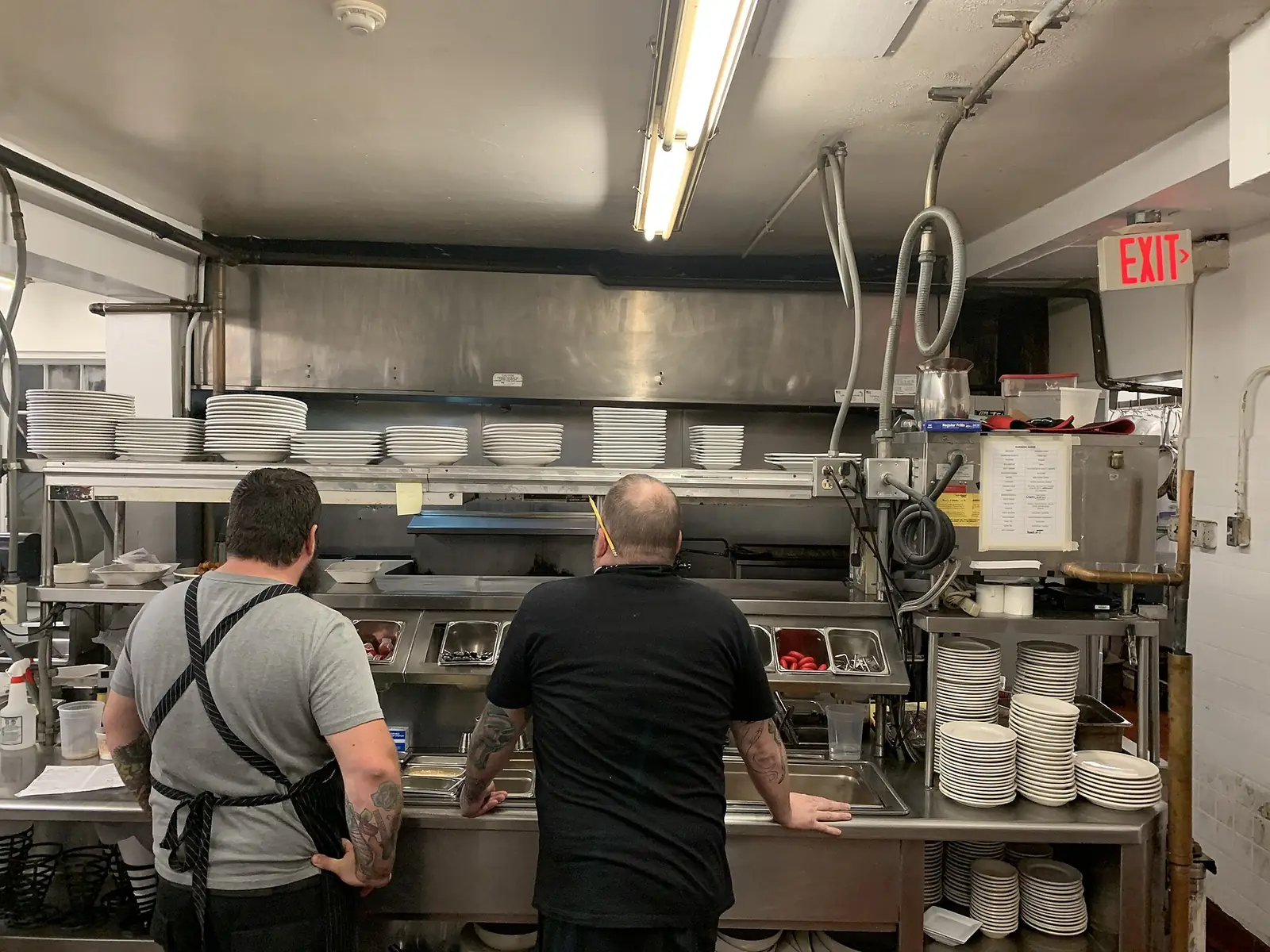
A kitchen fire suppression system that goes off has to be treated as discharged, not reset. The gas and electrical supply to the cooking line stay off, nothing under the hood gets wiped down or thrown away yet, and a licensed technician has to recharge and inspect the system before anyone cooks on that line again. NFPA 17A, the standard for wet-chemical kitchen systems, does not let a discharged system go back into service until that happens, whether the discharge put out a real fire or went off on its own.
One N8 customer described exactly this kind of morning in a review: "From the start, Nate and Ana helped me work through a fire suppression system issue with ease." That first call, before anyone starts cleaning up, is the one that keeps a bad morning from turning into a bad week.
What to do in the first few minutes
- Confirm the fire is actually out. Call 911 if there is any doubt, even if the system appears to have handled it.
- Shut off the gas and electrical supply to the cooking line and leave it off. A system that already discharged has nothing left to protect a reignition.
- Do not wipe down, hose off, or reset anything under the hood. The chemical residue and where it landed are part of what a technician checks.
- Photograph the line and the hood before anyone cleans. If the discharge becomes an insurance claim or a fire marshal question later, that record matters.
- Write down the time, what was cooking, and who was on the line. That detail is often what separates "the system did its job" from "something is wrong with the system."
- Throw away any food that was exposed to the suppression agent. It is a fire-suppression chemical, not a seasoning.
Why did it go off if there wasn't a fire?
A kitchen suppression system is tripped by heat at a fusible link, or by someone pulling the manual station, not by anything that sees the kitchen cook. The two most common reasons for a nuisance discharge are a fusible link rated too close to normal cooking temperatures, and a nozzle that drifted out of position after an appliance was moved, added, or swapped.
If your kitchen has changed anything on the line, tell your service company before the next scheduled visit, not after the system tells you itself. A flattop set where a fryer used to sit, or an appliance slid a few feet down the line, can leave a nozzle aimed at nothing and a link sitting over more heat than it was rated for.
Can you reset the system and keep cooking?
No. NFPA 17A section 8.4 governs what has to happen before a discharged system is returned to service: the agent tank is recharged, the fusible links and nozzle caps that triggered or were exposed are replaced, and the whole system is inspected against its listing. A kitchen that keeps cooking on an empty system is both a code violation and the exact risk the system exists to cover, which is why the rule treats every discharge the same way, real fire or not.
Who can do the recharge?
In Texas, recharging and inspecting a kitchen suppression system is restricted to a technician holding a Type K or Type A fire extinguisher license from the State Fire Marshal's Office, working for a registered company. Ask to see the license before anyone touches the system. We are factory-trained on Ansul R-102, the system in most local restaurant kitchens, and certified by CaptiveAire for both the CORE and TANK systems.
What about the food, the surfaces, and the hood?
Anything the agent reached is contaminated, not just dirty. Food exposed to the discharge gets thrown away. Surfaces, the hood interior, and the appliances under it need a real cleaning before food touches them again, not a quick wipe. If the discharge happened because of an actual fire, that is also the moment to have the hood and duct looked at for grease buildup, since NFPA 96 assumes a clean hood going into every inspection, not a sooted one.
Does the fire marshal need to see the kitchen before you reopen?
Depends on what happened. A real fire the system put out is the kind of event the fire marshal wants to know about, and a restaurant that reopens without that conversation risks it coming up at the next scheduled inspection instead. A nuisance discharge with no fire does not trigger an automatic reinspection, but the kitchen still needs a current recharge tag before it is back to code, the same tag a scheduled semi-annual visit would leave.
The report that comes with the recharge visit
A recharge visit ends the same way a scheduled inspection does: a new tag dated the day of service, and a written report of what triggered the discharge and what was replaced.
One thing we tell every kitchen we recharge: the monthly look is still yours. NFPA 17A asks the owner to check the pull station, the seals, the tag, and the nozzle caps once a month, and that part does not need a license. What needs one is everything that happens after a discharge.
If your kitchen hood suppression system just went off, real fire or not, N8 Fire & Safety recharges and inspects the same semi-annual NFPA 17A systems across San Antonio that we service on a schedule, with the same same-day report either way. For how the system works before it ever discharges, see our fire suppression system guide; for the monthly owner check and Texas licensing in more detail, see our food truck fire suppression post. Request an inspection or give us a call.
Frequently Asked Questions
Can I reset a kitchen fire suppression system myself after it discharges?
No. NFPA 17A 8.4 requires the agent tank to be recharged and the system inspected against its listing before it goes back into service, and in Texas that work has to be done by a technician licensed by the State Fire Marshal's Office. A kitchen that keeps cooking on a discharged system has nothing protecting the line if it happens again.
Why did my kitchen suppression system go off without a fire?
The two most common reasons are a fusible link rated too close to normal cooking heat, or a nozzle that drifted out of position after an appliance was moved, added or swapped. Report any change to your cook line to your service company before the next scheduled visit, not after the system reacts to it.
Who is licensed to recharge a kitchen fire suppression system in Texas?
A technician holding a Type K or Type A fire extinguisher license from the Texas State Fire Marshal's Office, working for a registered company. Ask to see the license before anyone touches the system.
Does food that was under the hood when the system discharged need to be thrown away?
Yes. The wet-chemical agent is not food-safe, so anything exposed to it gets thrown away. The hood interior and the appliances under it need a real cleaning, not a wipe-down, before food touches them again.
Will the fire marshal need to inspect the kitchen before it reopens?
Depends on what happened. A real fire the system put out is the kind of event the fire marshal wants to know about, and a restaurant that skips that conversation risks it coming up at the next scheduled inspection instead. A nuisance discharge with no fire does not trigger an automatic reinspection, but the kitchen still needs a current recharge tag before it is back to code.
What does a recharge visit after a discharge include?
The agent tank gets recharged, the fusible links and nozzle caps that triggered or were exposed get replaced, and the system is inspected against its listing. The visit ends the same way a scheduled semi-annual visit does: a new tag dated the day of service and a written report of what triggered the discharge and what was replaced.