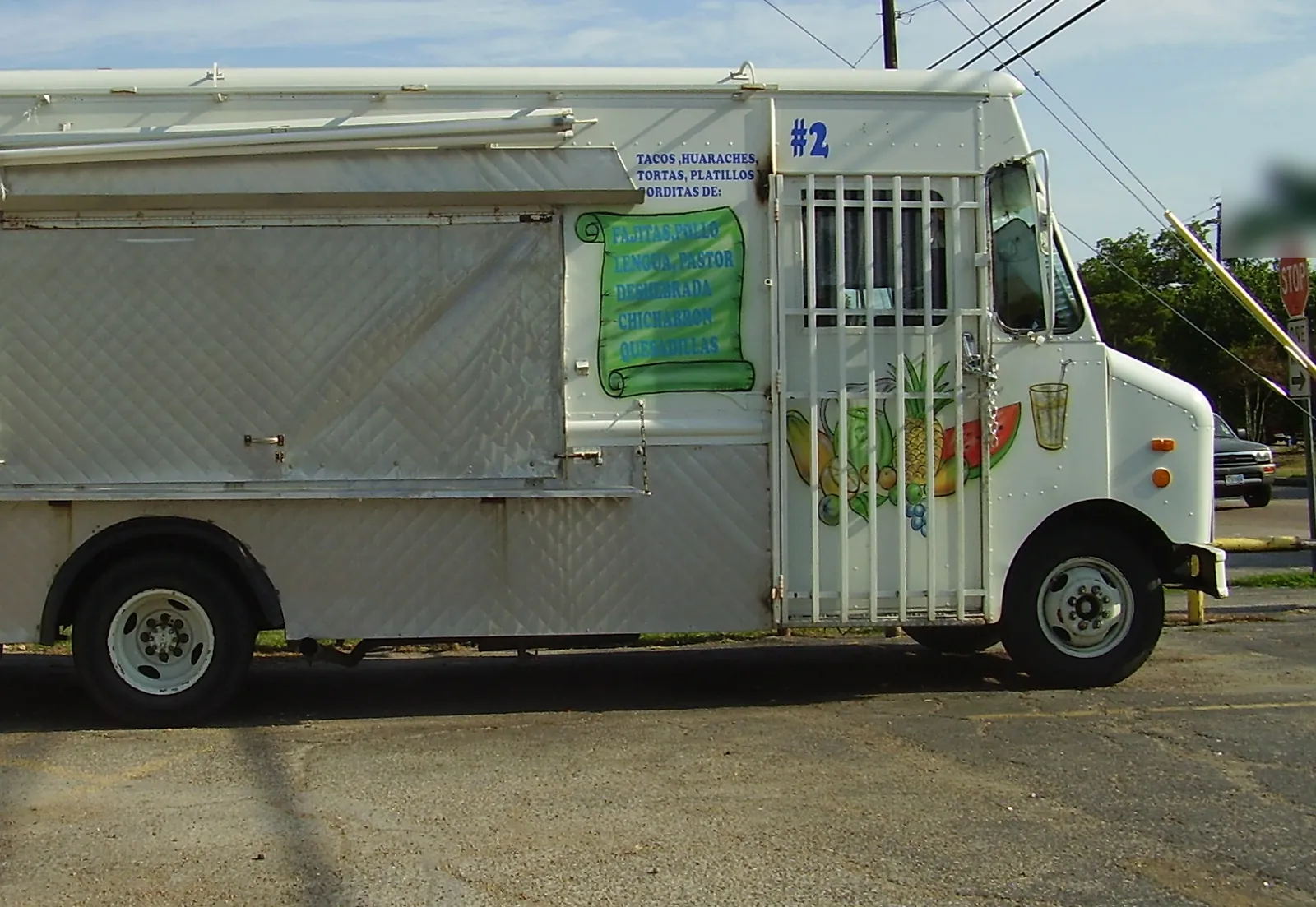
If your food truck fries, grills or works a griddle, San Antonio's rules for food truck fire suppression come down to two things over the cook line: a kitchen hood covering every appliance that makes grease-laden vapors, and an automatic fire suppression system protecting the cooking equipment. The San Antonio Fire Department checks both before it issues the truck's yearly fire permit, along with your extinguishers, propane setup, exits and generator. The suppression system needs service every six months and after any discharge, and the inspector expects to see that it is current.
One thing changed on July 1, 2026: the health license now comes from the state. The fire inspection did not move. Here is what the inspector checks, what the state change means for you, and what you can handle yourself.
Do I need a fire suppression system in my food truck?
Yes, if anything on the truck produces grease-laden vapors. San Antonio enforces the 2021 International Fire Code with local amendments, in effect since February 1, 2023, and that code has a section written for mobile food preparation vehicles. It says cooking equipment shall be protected by an automatic fire-extinguishing system (Section 319.4.1, which points to the commercial cooking rules in Section 904.13).
The city's own inspection form puts it in two lines: an exhaust hood covering all appliances producing grease-laden vapors, and an automatic fire extinguishing system installed and maintained for all cooking equipment. Fryers, flat-top griddles, charbroilers and woks all fall under it.
If your truck serves cold food, coffee or packaged snacks and makes no grease-laden vapors, those two lines do not describe you. You may still need the fire permit: the fire department requires one when there is cooking or heating in the unit or a generator, and the city health department lists propane tanks and gas, charcoal or wood grills as reasons for a fire inspection. Ask the fire department what applies to your setup before anyone sells you a system.
What does the San Antonio fire inspection check?
The fire department's mobile food establishment inspection form groups the items like this. Walk your truck down the list before the inspector does.
Hood and suppression
- A kitchen exhaust hood over every appliance that produces grease-laden vapors, installed and maintained
- An automatic fire extinguishing system installed and maintained for all cooking equipment
- Fryers kept away from open flames: a steel baffle at least 8 inches high between a fryer and the burners next to it, or 16 inches of space
The way to show the system is maintained is a service tag dated within the last six months, because that is the service interval.
Fire extinguishers
- Every extinguisher with a current inspection
- A 2A:10BC extinguisher, the minimum for every mobile vendor unit
- A 3A:40BC if the truck runs a portable generator
- A Class K extinguisher for fryers: one covers up to four fryers holding up to 80 pounds of oil each
Propane
- Containers on the outside of the unit, secured, and no more than 200 pounds in total
- Not on the roof, not in the passenger compartment, not past the rear bumper, and protected from a collision
- At least 5 feet from the main exit, with a NO SMOKING sign in letters at least 4 inches tall above the tank
- A listed LP-gas alarm inside the truck, and gas hose marked for 350 psi working pressure
Trucks that cook on compressed natural gas have their own lines on the form, including a methane alarm.
Exits
- At least 30 inches of clear aisle, with 74 inches of headroom over it
- If any spot inside is more than 10 feet from the door, a second exit at least 24 by 24 inches, labeled EXIT, that opens by hand from inside
Generator
- Refueled at least 20 feet from the truck and never where the public is
- Fuel kept in an approved safety can, away from the truck
- Grounded in an approved way
The city publishes the full mobile food inspection form, and the fire department's mobile food vending page explains how to apply. The permit is renewed every 12 months, and a permitted truck can be inspected at any time, not only at renewal.
How often does a food truck suppression system need service?
Every six months, and after any discharge. NFPA 17A, the standard for wet-chemical kitchen systems, sets the semi-annual cadence, and NFPA 96, the hood and exhaust standard, says not to cook while the system is out of service. A truck should not cook on a discharged or impaired system; it has to be recharged and tested first.
A service visit tests the release, checks that each nozzle is aimed at its appliance and capped, and replaces the parts that wear, such as the fusible links that sense the heat. It ends with a new tag and a written report.
Tell your service company when the cook line changes. Swap a fryer for a griddle or slide an appliance down the line and a nozzle can end up aimed at nothing. That is a small fix before the inspection and a failed line item during it.
Some of the checking is yours, and you do not need us for it. NFPA 17A asks the owner for a monthly look at the suppression system: the pull station unblocked, the seals and the tag in place, the nozzle caps on, and nothing moved under the hood. NFPA 10 asks the same of your extinguishers every month, and we show you how to do the monthly extinguisher check in another post. The six-month service and the annual extinguisher inspection are the parts that need a licensed technician.
In Texas, that means a technician licensed by the State Fire Marshal's Office for pre-engineered kitchen systems, working for a registered company. Ask to see the license before anyone works on the truck.
What changed on July 1, 2026?
Texas House Bill 2844 moved the food truck health license from city health departments to the Texas Department of State Health Services. Since July 1, 2026, each truck or trailer needs its own state license, and food safety inspections are scheduled through the state instead of the San Antonio health department.
The fire side stayed local. The new law says a mobile food vendor must comply with the local laws where it operates, including all fire codes (Health and Safety Code Section 437B.101), and the San Antonio health department says a fire inspection is required yearly for the state license. What the law does limit is the state's own rules: they cannot make a truck take an additional fire inspection if it passed a state or local fire inspection in the previous 12 months.
So keep the fire permit sticker current and the paperwork from your last fire inspection with the truck. A current suppression tag and current extinguisher tags are what get that inspection passed.
Wet or dry chemical: which system does a food truck need?
For a truck with fryers or griddles, a wet-chemical system. NFPA 96 expects kitchen systems to meet UL 300, the test standard written around modern cooking oils, and the kitchen hood systems listed to it are wet-chemical systems. The wet agent smothers the burning oil and cools it, which keeps hot vegetable oil from flaring back up. A dry-chemical agent knocks the flames down without the cooling.
If you bought a used truck with an older dry-chemical hood system, have it looked at before your inspection, not on the morning of it. The fire suppression system guide explains how the different agents work.
Who services food truck suppression systems in San Antonio?
We do. N8 Fire & Safety services and installs kitchen hood suppression systems on food trucks and trailers across San Antonio, the same wet-chemical systems we service in restaurant kitchens. That covers the semi-annual inspection, a recharge after a discharge, nozzle changes when your appliances change, and a written report the same day. Our technicians are factory-trained on Ansul R-102, the system in most local restaurant kitchens, and we also inspect and tag the truck's extinguishers on the same visit.
One food truck owner, Vinnie A., wrote in a review that our technician Scott "performed a detailed inspection and cleaning of my fire suppression system for our food truck."
If your suppression tag is close to six months old, or your fire inspection is coming up, request an inspection or give us a call.
Frequently Asked Questions
Do I need a fire suppression system in my food truck?
Yes, if any appliance on the truck produces grease-laden vapors: fryers, griddles, charbroilers and woks all count. San Antonio's mobile food inspection form requires an exhaust hood over those appliances and an automatic fire extinguishing system for the cooking equipment, under the 2021 International Fire Code. A truck that only serves cold food or coffee may not need one, so ask the fire department before you buy a system.
How do fire suppression systems for food trucks work?
Heat-sensing links over the cooking line, or a manual pull station, release a wet-chemical agent through nozzles aimed at each appliance and into the hood and duct. The agent smothers and cools the burning oil, and the system shuts off the fuel to the appliances under the hood. It is the same kind of system a restaurant kitchen uses, sized for the truck's hood.
How often does a food truck suppression system need to be serviced?
Every six months, and after any discharge. NFPA 17A sets the semi-annual cadence for wet-chemical kitchen systems, and the fire inspector looks for a current service tag. Between visits, NFPA 17A asks the owner for a monthly look: the pull station clear, the seals and tag in place, and the nozzle caps on.
What fire extinguishers does a food truck need in San Antonio?
Every mobile vendor unit needs at least a 2A:10BC extinguisher with a current inspection. A truck that runs a portable generator needs a 3A:40BC, and fryers need a Class K: one Class K covers up to four fryers holding up to 80 pounds of oil each. The extinguishers get a professional inspection every year, and the monthly visual check is yours to do.
Do I still need a San Antonio fire inspection now that the state issues the license?
Yes. Since July 1, 2026 the Texas Department of State Health Services issues the mobile food vendor license, but House Bill 2844 keeps local fire codes in force, and San Antonio's health department says a fire inspection is required yearly for the state license. The state's rules cannot require an extra fire inspection within 12 months of one the truck passed.
Can I install or service a food truck suppression system myself?
No. In Texas, kitchen suppression systems are installed and serviced by technicians licensed by the State Fire Marshal's Office who work for a registered company. The system also has to be installed to its listing and the manufacturer's instructions, which is what the inspector checks it against.
How much does a food truck fire suppression system cost?
It depends on the length of the hood, how many appliances sit under it, and whether the truck already has a hood and a gas shutoff. We quote it after we see the truck.