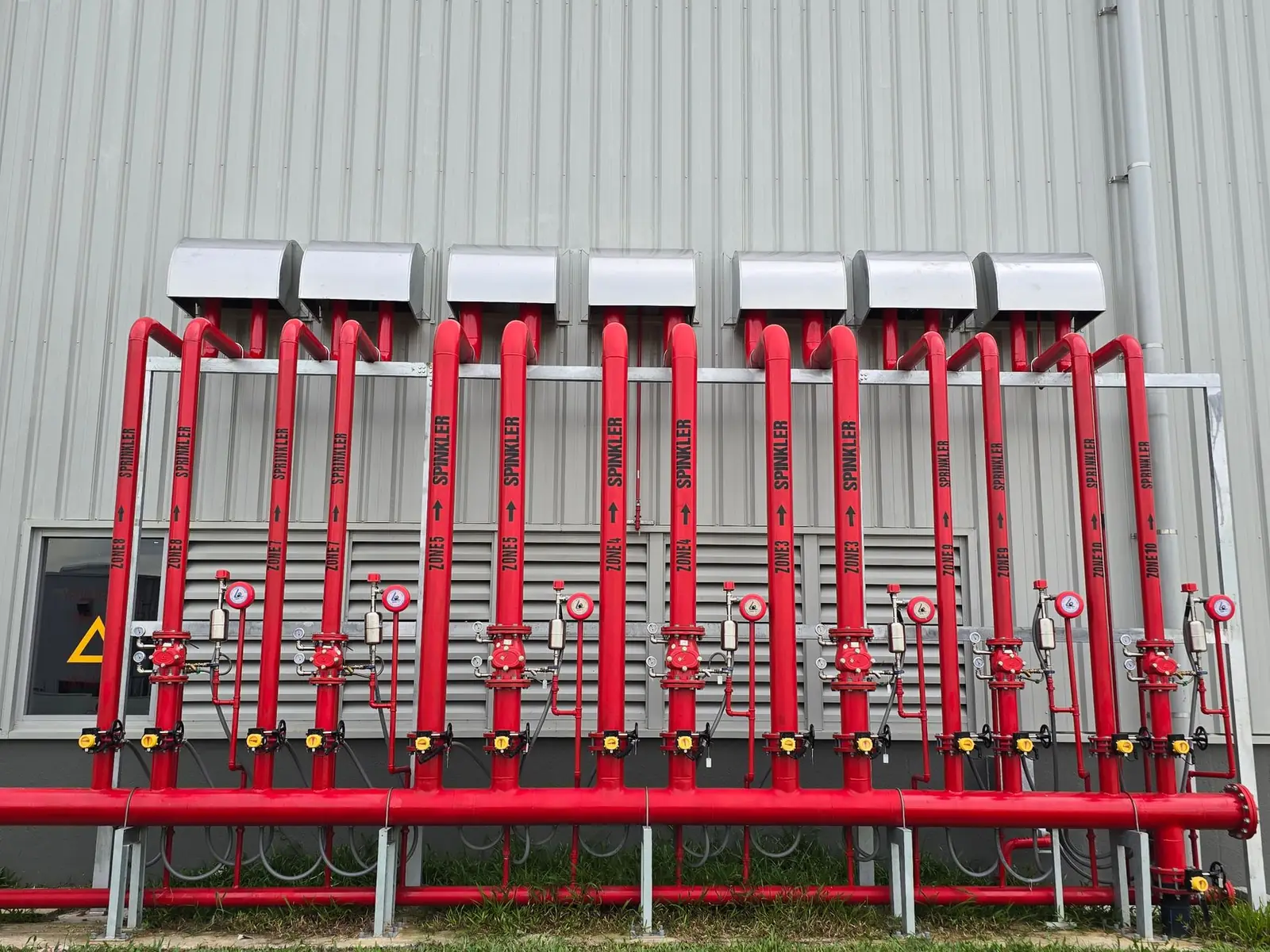
A fire sprinkler room needs a sign on the door identifying it, and NFPA 13 sets the specifics: a contrasting color, letters at least 2 inches tall with a minimum 3/8-inch stroke, on a permanently marked, weatherproof metal or rigid plastic sign. Every control valve needs its own sign stating which part of the building it controls. Any pressure-regulating valve needs a tag stating its pressure setting. All three are inspection items, and all three are commonly missing or faded on buildings we take over.
Here is what each sign is for, what it has to say, and who is on the hook when one goes missing.
Why does a sprinkler room need a sign at all?
So a firefighter or a technician can find the equipment without opening every door in the building. In an emergency, the riser room is where the fire department connects and where the system's control valve lives. A clearly marked door means seconds saved, and seconds matter when the alternative is guessing. Outside of an emergency, the same sign tells a technician doing a routine valve inspection exactly which door to open.
The room usually needs a second sign too: NO STORAGE PERMITTED. Riser rooms have a habit of turning into extra storage space, and anything stacked against the riser or blocking the door slows down the one person who needs fast, clear access to it.
What has to be on the riser room door sign?
NFPA 13, the Standard for the Installation of Sprinkler Systems, sets the baseline: the sign states the room's purpose in contrasting colors, with letters at least 2 inches tall and a stroke at least 3/8 inch wide, mounted permanently at the door. The sign itself has to be durable, not a taped-up printout, so it is typically weatherproof metal or rigid plastic, fastened with corrosion-resistant hardware rather than tape or a nail that will let it slide or fall.
Exact sizing sometimes goes further than the base NFPA text depending on the local fire code adoption. Bexar and Guadalupe Counties adopt NFPA 13 and 25 through the Texas fire code, which is one more reason we coordinate directly with the AHJ, the authority having jurisdiction, rather than guessing at a generic size and hoping it passes.
What does the sign on each control valve mean?
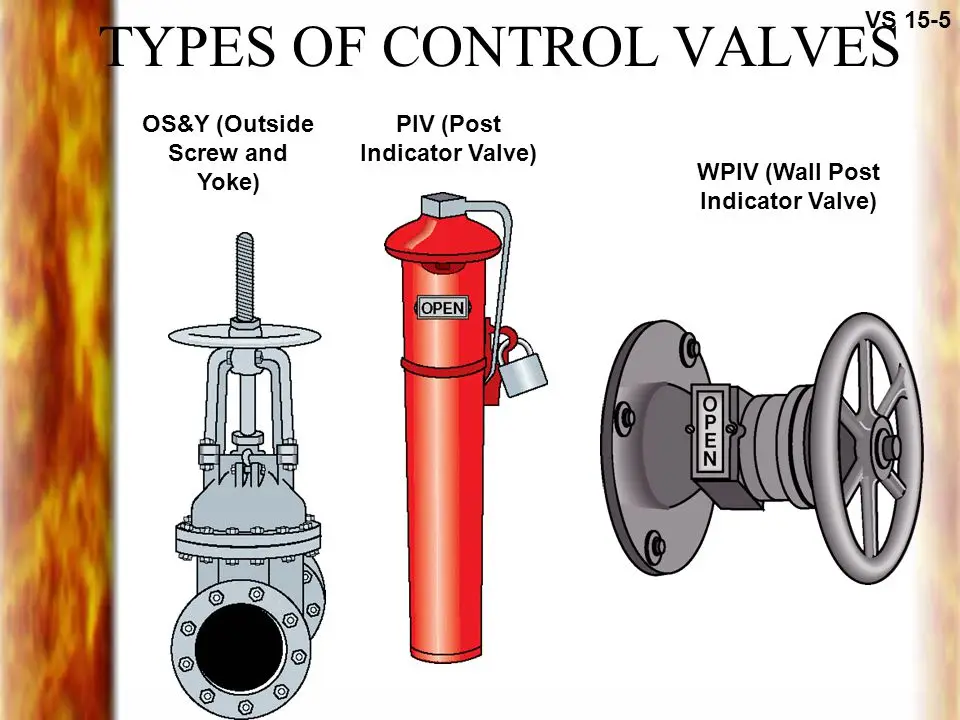
NFPA 25 requires every sprinkler control valve to carry a sign identifying the area of the building that valve controls. On a single-system building that might be as simple as "controls all sprinklers, this building." On a larger property with multiple risers or floor control valves, it gets more specific, and where shutting down one system requires closing more than one valve, the signs have to cross-reference each other. That cross-reference is what keeps a technician, or an unfamiliar contractor, from shutting off the wrong section during a repair.
A missing valve sign is not cosmetic. It is the difference between a technician isolating exactly the section that needs work and shutting down protection for the whole building by mistake.
What is the tag on a pressure-regulating valve for?
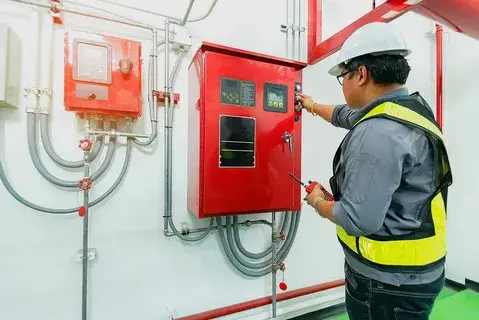
Pressure-regulating valves, or PRVs, show up on standpipes, on fire pump suction and discharge lines, and on some high-rise sprinkler risers where pressure needs to be reduced before it reaches a hose connection. Each one carries a permanent tag stating its pressure setting. That tag lets a technician confirm, without running a test, whether the valve is still set where it should be. If the tag is missing or the reading does not match, that valve gets flagged for testing before anyone assumes it is fine.
Do fire extinguishers need their own signs too?
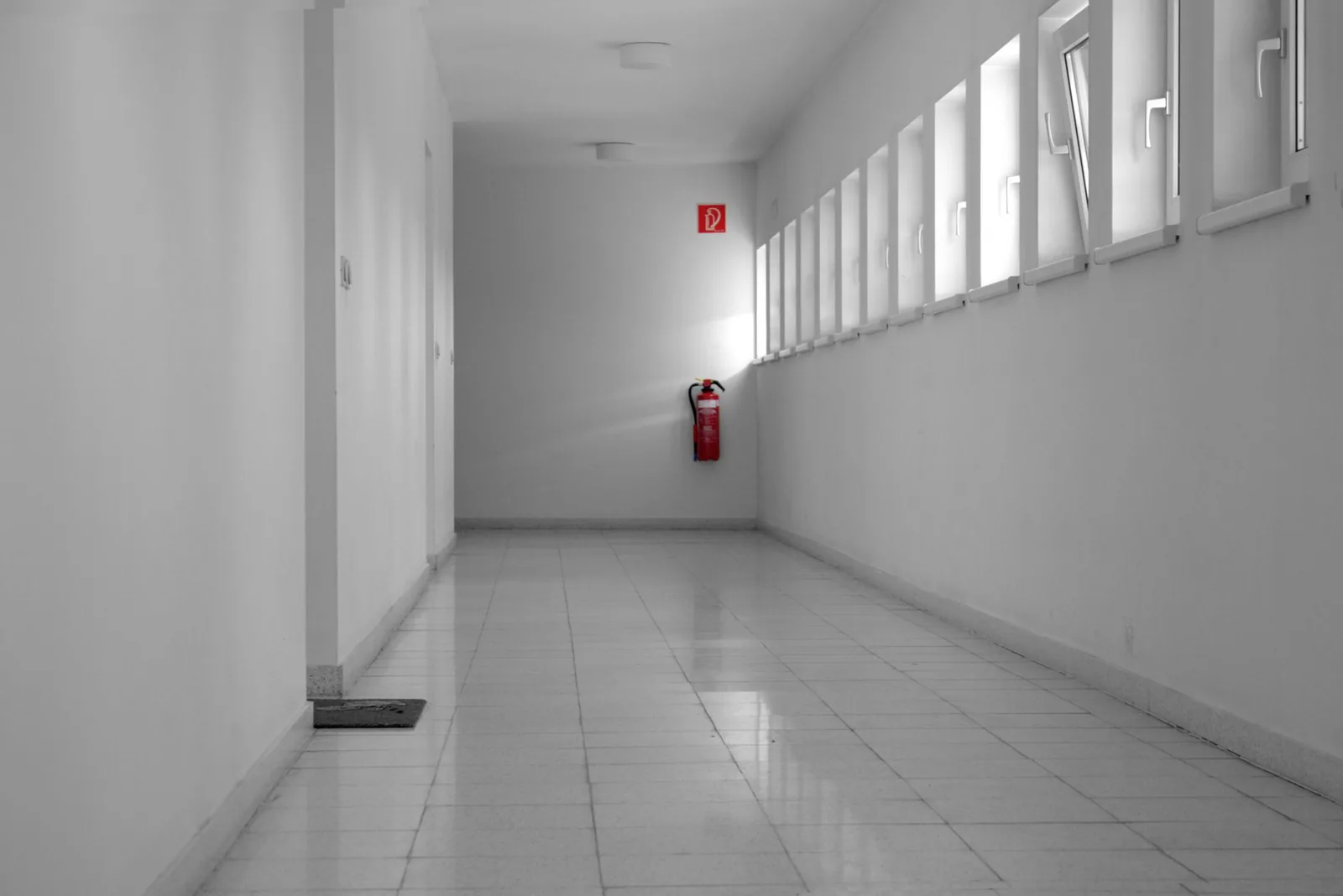
Yes, but under a different standard on a different schedule. Sprinkler riser, valve, and PRV signage falls under NFPA 13 and 25. Fire extinguishers fall under NFPA 10, which requires a visible location sign or cabinet marking plus an inspection tag that gets replaced at each annual service. The two systems get confused because they share a wall sometimes, but they are inspected, tagged, and enforced separately. Our extinguisher inspection and recharging service tags those units the same way our sprinkler visits handle riser and valve signage.
When does the fire marshal actually check the signage?
Control valve signs get eyes on them more often than most people expect. NFPA 25 has valve inspections on a weekly, monthly, or quarterly schedule depending on whether the valve is electronically supervised, and confirming the sign is present and legible is part of that routine walk, not a separate task. The riser room door sign and any PRV tags get a direct look from the fire marshal at the annual inspection, alongside the rest of the sprinkler system test.
A faded, painted-over, or missing sign reads to an inspector exactly like a missing one. If the letters cannot be read from a normal distance, it does not count.
A missing sign is a cheap fix, not a big one
This is one of the easiest deficiencies to clear. Replacing a riser room sign or a valve tag is inexpensive hardware, and because our technician is already standing in the room for the quarterly or annual test, we flag it and swap it during that same visit rather than scheduling a separate trip. It is one of those items we would rather point out and fix on the spot than write up as a line item that sits open for months.
If you are not sure whether your riser room, valve signs, or PRV tags meet the current requirement, request an inspection and we will check all three along with the rest of the system, and tell you in the same-day report exactly what, if anything, needs replacing.
Frequently Asked Questions
What does a fire sprinkler riser room sign say?
The door to the room housing the sprinkler riser is marked to identify its purpose, in a contrasting color with letters at least 2 inches tall and a minimum 3/8-inch stroke, on a permanently marked, weatherproof metal or rigid plastic sign. A NO STORAGE PERMITTED sign is often required alongside it, since anything stacked against the riser slows down a technician or a firefighter.
Do fire sprinkler control valves need to be labeled?
Yes. NFPA 25 requires every control valve to carry a sign stating the area of the building it controls. If closing more than one valve is needed to isolate a system, the signs have to cross-reference each other, so nobody is guessing which valves to turn during a repair or a fire.
What is the tag on a pressure-regulating valve for?
A pressure-regulating valve, used on standpipes, fire pump suction and discharge, and some high-rise risers, carries a permanent tag stating its pressure setting. That lets a technician confirm at a glance, without testing, that the valve has not drifted from where it was set.
Do fire extinguishers need their own signs too?
Yes, but they are a separate requirement under NFPA 10, not NFPA 13 or 25. Extinguishers need a visible location sign or cabinet marking plus an inspection tag, which is a different system on a different schedule than the sprinkler riser and valve signs.
Who is responsible for replacing a missing or damaged sprinkler sign?
The building owner. It is not something the fire marshal will fix for you, and it is one of the more common findings on an inspection precisely because it gets overlooked between annual visits. Replacing it is inexpensive hardware, not a special trip.
Does NFPA 25 require checking the signage during inspections?
NFPA 25 does not list signage as its own line item with its own frequency, but valve inspections happen weekly, monthly, or quarterly depending on how the valve is supervised, and confirming the sign is present and legible is part of that walk. The fire marshal checks it directly at the annual.